

Book Four has a Name!
A Title for the New Book and Deep Moral Dilemmas 🔥📚

I have a title! Or at least a working title. The book that up until now I’ve been referring to as book four, is now Disentangled. It may not be the final title but it is good to call it something other than book four as it gives it a shape and a more solid presence in the world. It also makes me very excited to have another piece of the process in place.
This week I was featured on the award-winning Blackbird Writers Presents where I discussed the Gatherer series, deep moral dilemmas (for characters, not in real life, though there are plenty of those) and, of course, the new book Disentangled.
Book Talk
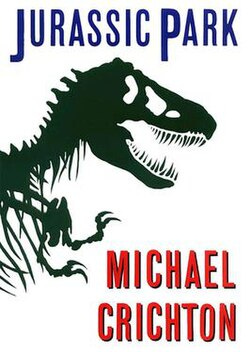
This month I have been re-reading Jurassic Park. It is the quintessential book on technology-gone-wrong. I especially loved the premise because the amazing dinosaurs that are first created through genetic engineering are for entertainment. There isn’t any benefit to humanity or a problem solved. The technology that goes terribly wrong was all about providing a few hours of amusement for the guests.
It’s a taut, nail biting thriller which I love. As with all stories of technology-gone-wrong, it’s ultimately about how humans respond. Michael Crichton has a great cast of characters from the billionaire Hammond who embodies the ego of humans, Malcolm the chaos theorist who loves to debate the theory of it until the reality of it comes crashing down, and then Hammond’s two grandchildren who are just trying to get off the island alive.
A great read for anyone interested in technology-gone-wrong and its predictable and unpredictable consequences.
Geek Corner
One of the most fascinating areas during my research for Disentangled has been the dive into brain implants. Brain implants or interfaces have been around for a while with many humans having already had interfaces implanted in their brains. Much of the early research focused on people with epilepsy with the devices helping notify the participants when they were about to have a seizure. One woman was able to learn what it felt like when a seizure was coming, so that she was able to prepare for them, even without the notification from the device.
Many people developed an intense relationship with their device, often with profound effects on their sense of identity. One woman felt like a whole new person and grieved when her implant had to be removed because the company was going out of business. Two years after an implant, 65% of patients had a breakdown in their marriages or relationships, and 64% wanted to leave their careers. Some experienced a fundamental estrangement from themselves. One felt like an electronic doll. Another said he felt like Robocop, under remote control.
It is a perfect illustration of the challenges when humans interact with technology . The responses are personal, the effects unpredictable, and the smallest change can have a huge impact.
Glad you're on your way with your next book. A working title makes it feel that much more real.
I'm also fascinated by brain implants. In my upcoming book, Electromagnetic Assault, https://brucelanday.com/books-and-writing/ which releases on April 7th, neurotech plays a big part in the story. In the near future elite military forces all have specialized neurotech implants where they can communicate wordlessly with their team, control their weapons, and even fly aircraft. Like you've found, there's real science and some significant breakthroughs already happening.
It will be interesting where you take this technology in your books. Keep writing!
Great name!!! I love Disentangled.